The Natural Beauty of Beeswax Bloom
BEESWAX BLOOM · A SOFTER SIDE OF GOLD
You chose a golden beeswax candle, enjoyed it on your shelf, and later noticed a pale veil across the surface. Has something gone wrong? Often, you are seeing beeswax bloom: a natural change in the wax’s surface that gives it a softly frosted appearance.

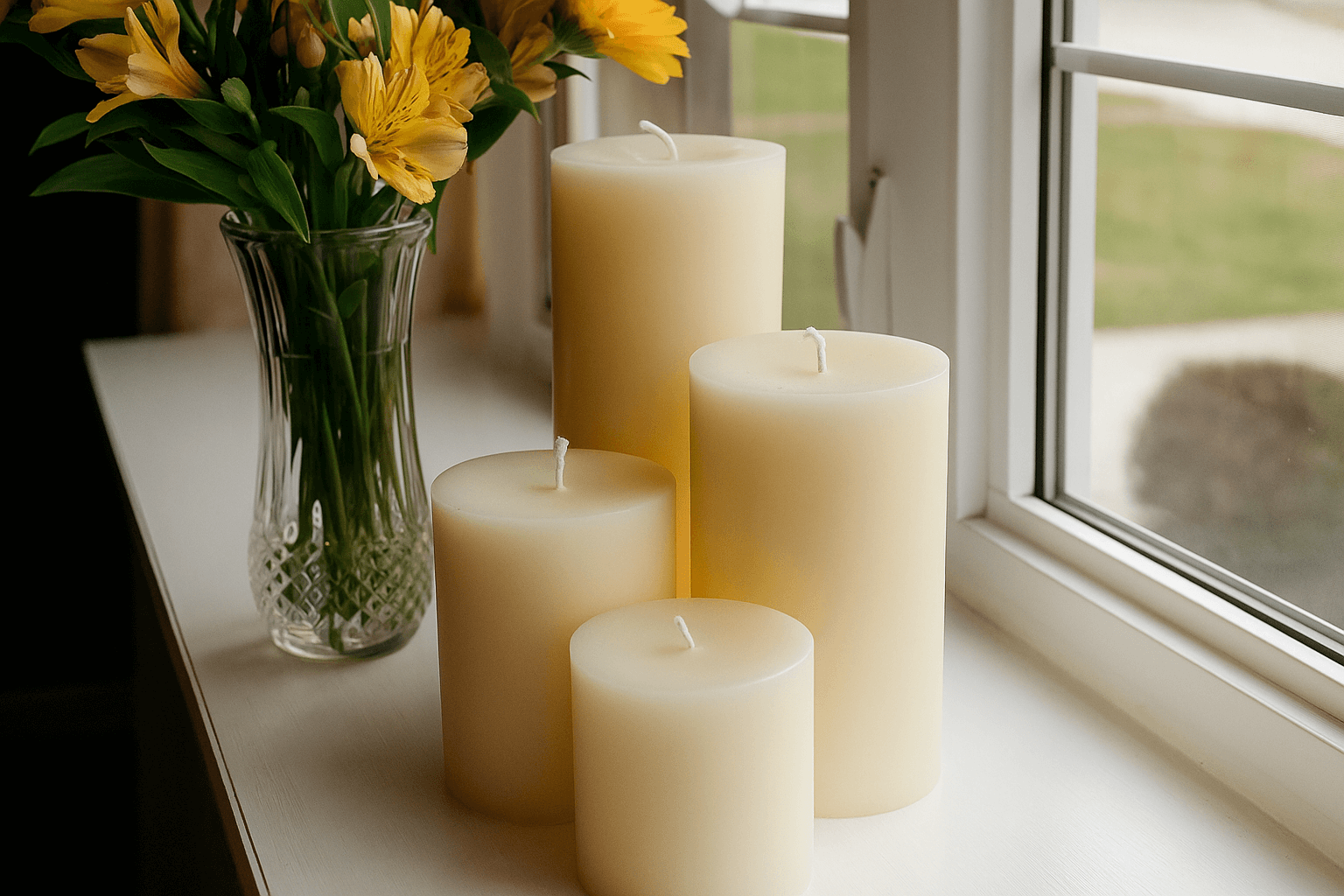
Shop the featured candles: Yellow 3 × 6 inch pillar
The quick answer: ordinary beeswax bloom is a thin, whitish crystalline layer on the wax. You can enjoy that finish or gently buff it with a clean, dry, soft cloth. Make sure the candle is unlit and completely cool before polishing.
What is beeswax bloom?
Beeswax contains a mixture of natural compounds. Under certain conditions, some components can separate toward the surface and form a fine crystalline layer. The result may look like a pale haze, a muted sheen or delicate frosting over the candle’s original color.
Researchers studying bloom on beeswax seals identified naturally occurring wax compounds in that surface layer. The everyday description “the wax has bloomed” is a friendly name for a real material phenomenon.
Bloom softens the appearance of the original wax color. This differs from a candle made with white or ivory beeswax, which we explain in Ivory & Honey.

Shop the featured candles: Yellow 3 × 6 inch pillar
What bloom does—and does not—tell you
Bloom can develop during storage and may return after polishing. It is generally a matter of surface appearance, rather than a reason to discard an otherwise sound candle.
It is not a reliable clock. You cannot look at the amount of bloom and calculate when a candle was poured. Conditions and the particular wax matter, so two candles need not change at the same rate.
Nor should a white surface film be treated as a home purity test. Appearance alone cannot confirm a candle’s ingredients or establish that it contains 100% beeswax. Read the maker’s wax description and sourcing information. A candle without visible bloom is not automatically inauthentic.
How to remove beeswax bloom gently
For ordinary bloom on a plain beeswax surface, use a light touch. Gently wipe bloom with a soft cloth. No special polish is needed for this simple approach.
- Let the candle settle. Work at normal room temperature with the candle unlit and completely cool. Never handle or polish a candle with liquid wax.
- Choose a clean cloth. Use a dry, soft, lint-free cloth. Make sure it has no grit, furniture polish or cleaning residue on it.
- Support the candle. Set it securely on a stable surface, then gently buff a small section of the side. Use light strokes rather than hard pressure.
- Work around the shape. Continue only as needed. Be especially gentle with raised details or slender parts; stop if rubbing marks or distorts the wax.
- Finish with a check. Remove any loose fibers and put the candle back in its suitable holder. Keep the top and wick area free of debris before later lighting.
Do not scrape off the surface or apply oils, solvents or household cleaners. If light buffing does not give the result you want, ask us about that particular candle rather than increasing the pressure or heating it.

Shop the featured candles: Yellow 3 × 6 inch pillar
You can also keep the frosted finish
Polishing is a choice. Some people enjoy the softened color of a bloomed pillar beside aged brass or dark wood; others prefer the deeper golden tone of a freshly buffed surface.
Ordinary bloom is generally cosmetic. Still, the presence of bloom says nothing about whether the wick, holder or candle is otherwise ready to use. Follow the same candle-care instructions and safety checks you would use for a smooth candle.
Store it with a little care
Choose a clean, dry place away from direct sunlight and heat, with protection from dust and knocks. Utah State University Extension recommends dry, protected storage for beeswax. For finished candles, protect delicate details and store tapers flat to help them hold their shape.
There is no need to promise yourself a permanently bloom-free surface. If bloom returns, you can leave it or repeat a gentle polish. For candles saved for a dinner or gift, take a look ahead of time so you can choose the finish you prefer without rushing.
Questions we hear about bloom
Does bloom mean my candle has gone bad?
Ordinary bloom alone does not mean a beeswax candle has spoiled. If you notice something beyond a pale surface haze—such as damage, contamination or an unfamiliar odor—ask the seller before using it.
Will polishing turn a yellow candle white?
No. Gentle buffing reduces the surface haze and reveals the underlying wax color. It does not change golden beeswax into white beeswax.
Why did the white film come back?
Removing visible bloom does not prevent the wax from blooming again. Its return does not mean you polished incorrectly.
Should I polish a candle before giving it as a gift?
Choose the finish you like. If you keep the bloom, a simple note explaining the natural surface change can help the recipient enjoy it with confidence.
Enjoy the character of beeswax
Explore our classic beeswax pillars for their simple shapes and natural color. If you have a question about the finish of a Bees Light candle you own, email info@beeslightcandles.com with a clear photo and its product name.
Featured collection
-
9 Inch Square Braided Series Beeswax Coated Cotton Wicks with Metal Tab
Regular price From $4.70 USDRegular priceUnit price per -
3 Inch Yellow Beeswax Pillar Candles
Regular price From $13.00 USDRegular priceUnit price per -
3 Inch White Beeswax Pillar Candles
Regular price From $16.00 USDRegular priceUnit price per -
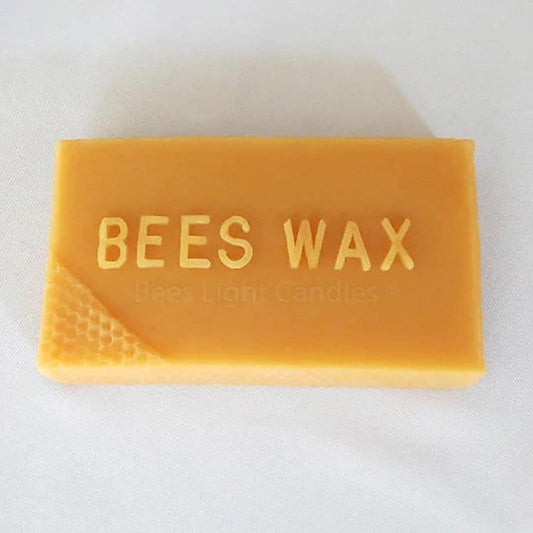
100% Pure Beeswax Blocks – Handcrafted in the USA
Regular price From $11.95 USDRegular priceUnit price per